
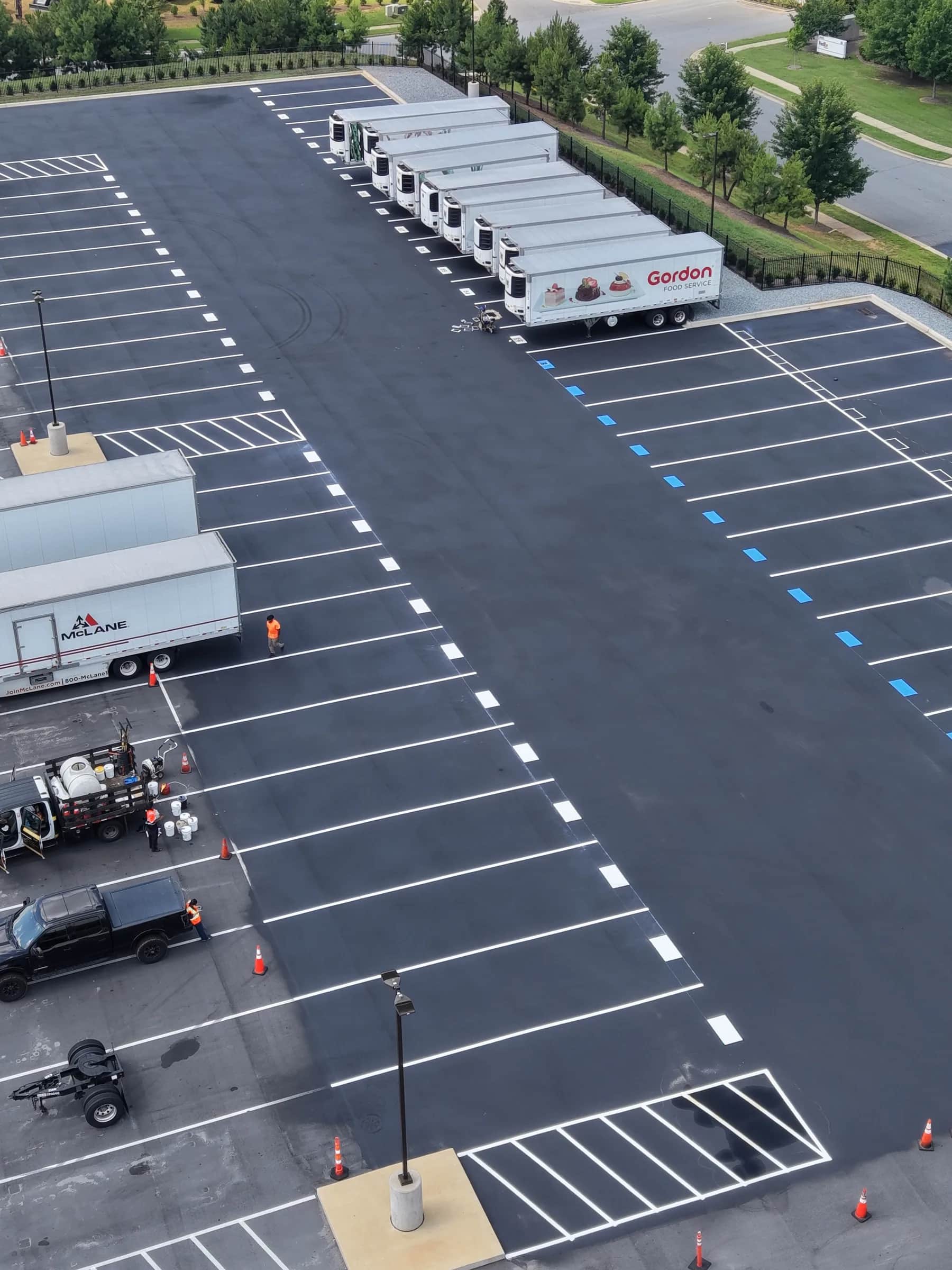
Logistics Facility Parking Lot Solutions
Heavy traffic demands durable pavement. Crown Paving builds and maintains logistics facility pavement for truck movement, loading access, safety, and operational uptime.
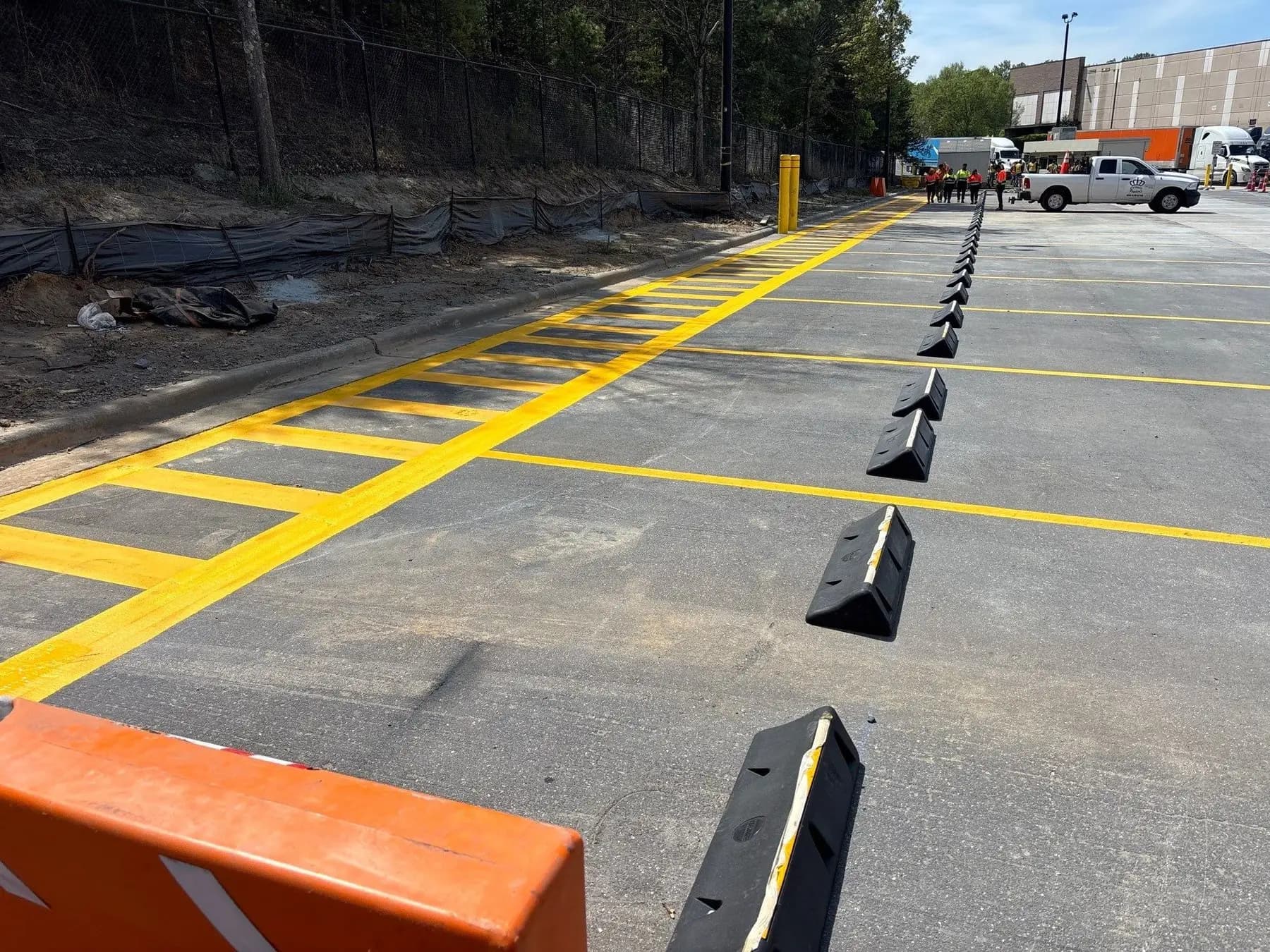
Built for the Loads, Sequenced Around the Docks
A distribution yard takes loads a parking lot never sees, and it takes them in specific places: staging lanes, the turning radius trucks actually use, and the apron in front of every dock door. Crown Paving specifies depth where the load is rather than uniformly across the site, which is what keeps the budget on the areas that fail. The other half is sequence. Dock access and truck routes stay open in phases, with night and weekend scheduling where the traffic pattern allows, because a blocked dock costs more than a day on site.
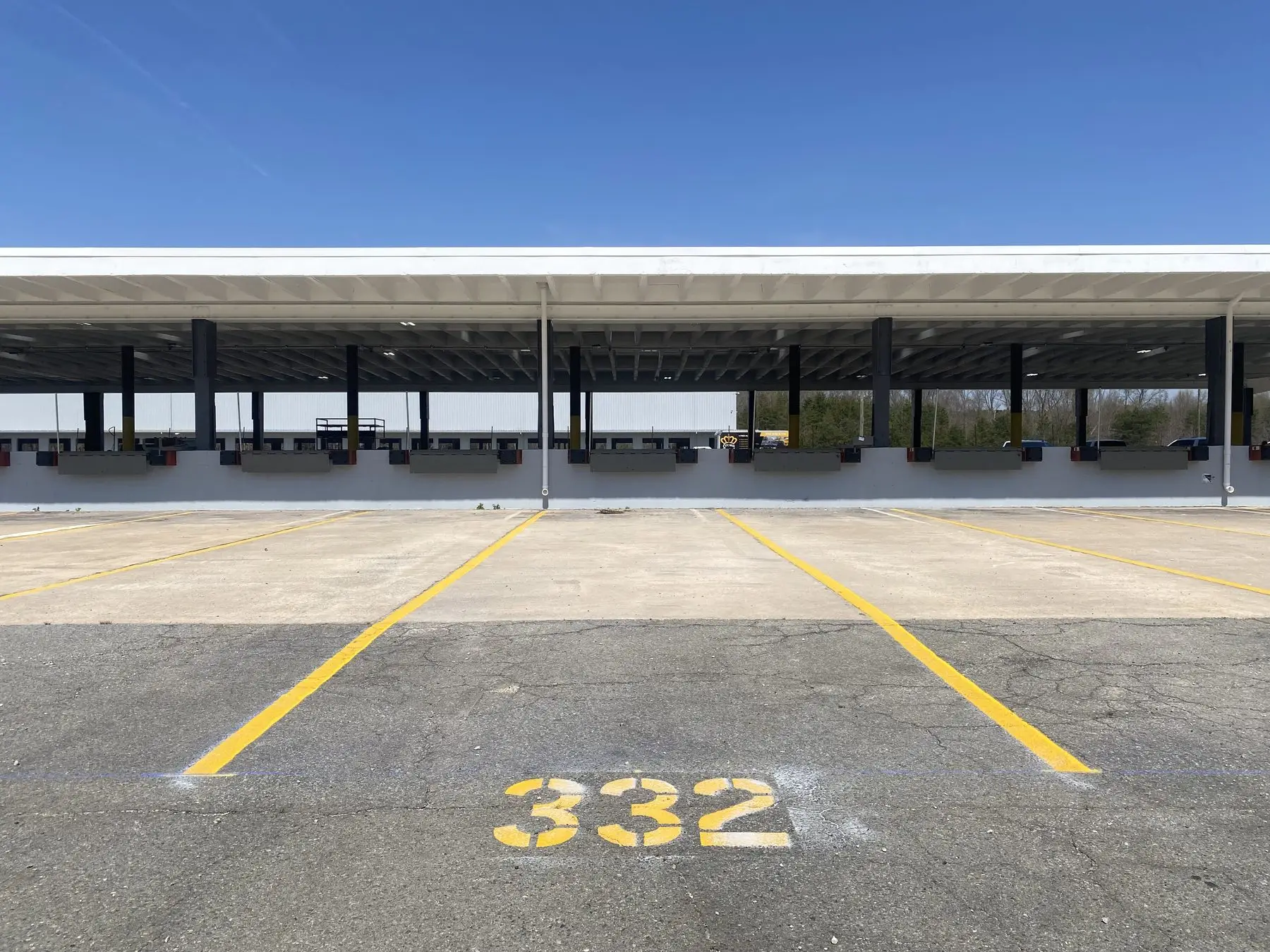
Types of Logistics Facilities We Serve
Crown Paving supports industrial and logistics properties with asphalt, concrete, striping, ADA, drainage, and maintenance needs across the Southeast.
- Distribution centers
- Warehouses
- Fulfillment centers
- Truck terminals
- Freight facilities
- Manufacturing logistics yards
- Loading dock facilities
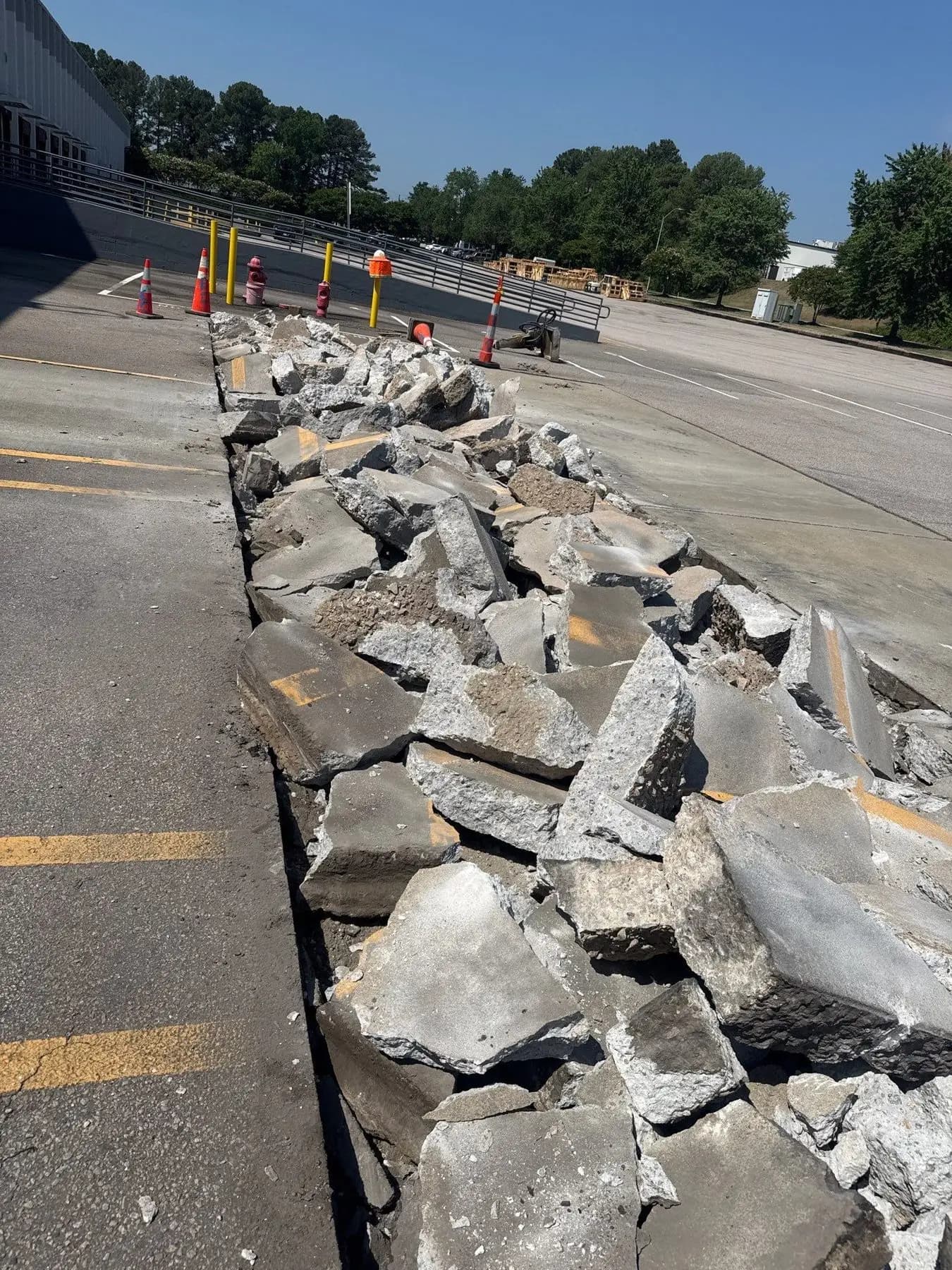
How Do You Pave a Distribution Center That Runs 24 Hours a Day?
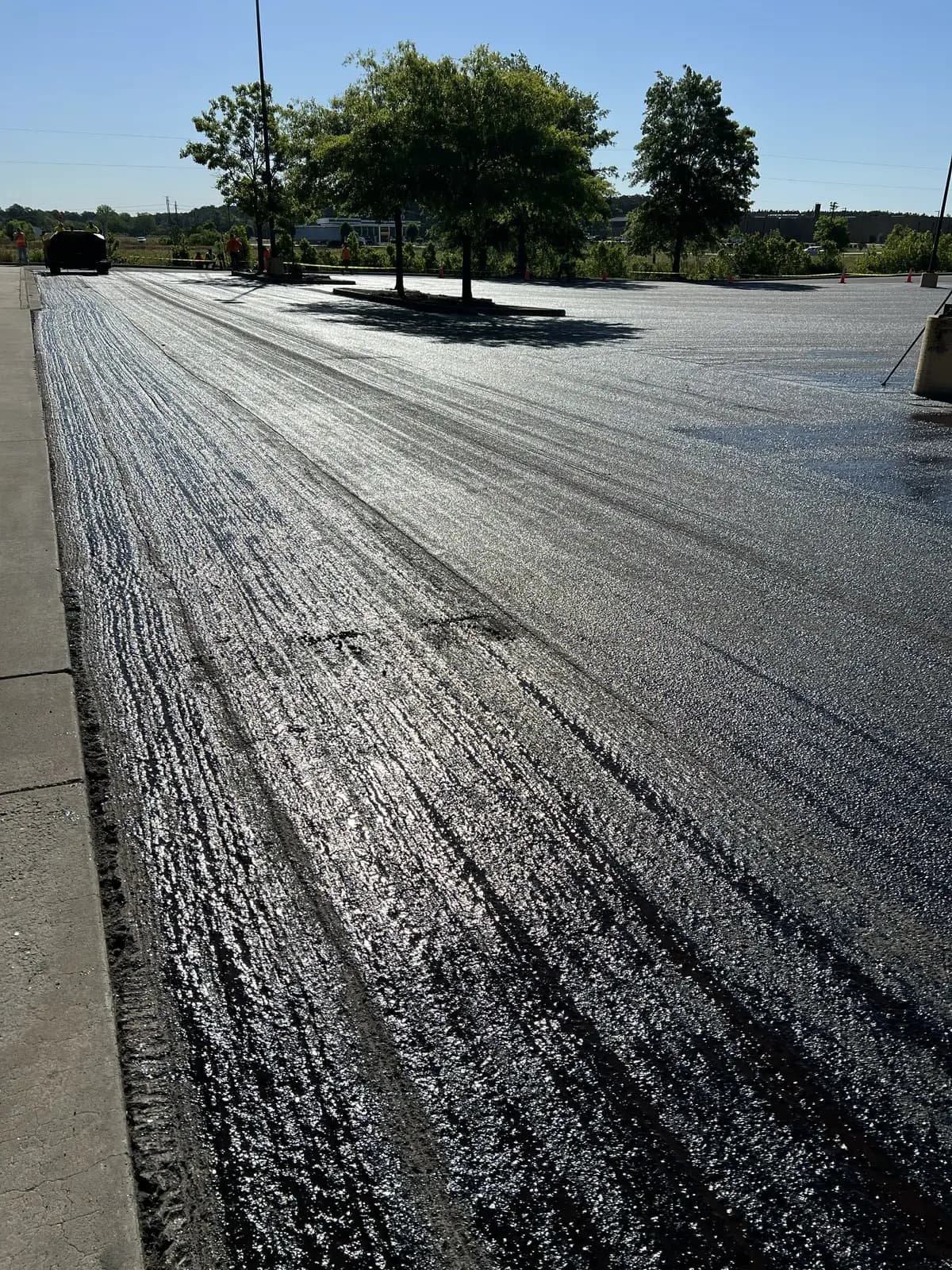
In phases, around your truck routes. Crown Paving plans logistics work so that dock access and critical operational zones stay open, using night or weekend scheduling where the traffic pattern allows it. Interrupting truck routes or blocking loading docks does not just cost a day on site, it ripples through the delivery schedule, so the sequence is designed around your operation rather than around the crew.
What Does a Logistics Yard Need That an Ordinary Lot Does Not?
Structural capacity, in specific places. Tractor-trailers, forklifts and loaded containers put loads on pavement that a parking lot never sees, and the punishment is not spread evenly. Truck staging areas and drive lanes need thicker base and binder and a rut-resistant mix. Loading docks and truck aprons take extreme static load from parked trailers plus aggressive turning, which is where concrete earns its cost. More: Your Distribution Center Parking Lot Demands Top-Tier Paving.
Where Does Pavement Fail First at a Distribution Center?
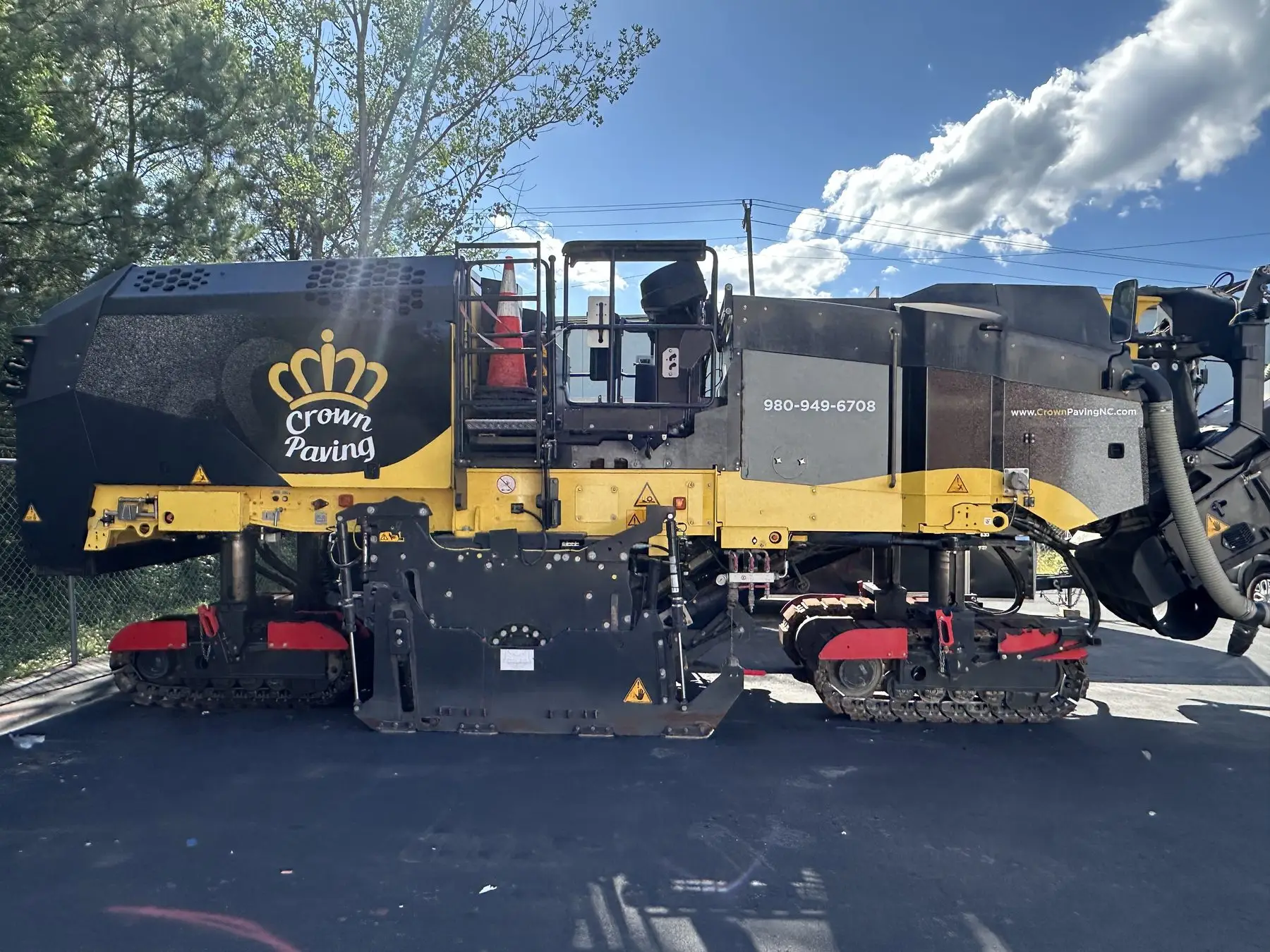
Below the surface. Around 90% of pavement problems originate in the sub-base, and a warehouse yard challenges sub-base integrity continuously, which is why crack filling and seal coating are cost-effective rather than cosmetic on this kind of property. Above ground, the first visible failures usually show up where the loads concentrate: dock aprons, the turning radius trucks actually use, and dumpster pads.
Pavement Engineered for Truck Loads
Truck Courts & Trailer Staging
Thicker base and binder with a rut-resistant mix, because loaded trailers concentrate weight into narrow, repeated paths.
Concrete Dock Aprons & Approach Slabs
Where parked trailers apply extreme static load and trucks turn hard, concrete earns its cost over asphalt.
Access Roads & Haul Routes
Private roadways built and maintained for continuous heavy vehicle traffic.
Drainage & Catch Basin Repair
A yard that ponds is a yard whose base is being undermined. Inlets, basins and grades corrected at the cause.
Industrial Striping & Safety Markings
Drive lanes, fire zones, staging areas and forklift paths marked so the yard reads clearly under pressure.
Patching & Crack Sealing on a Cycle
Scheduled maintenance that keeps water out of the sub-base, where most pavement failure actually starts.
Ready to Improve Your Logistics Facility Pavement?
Request an estimate and tell us about your logistics operation, truck traffic, loading docks, pavement condition, schedule constraints, and bid documents.
Request an Estimate