
Commercial Asphalt Resurfacing
Whether your parking lot is showing its age or simply needs a fresh new surface, Crown Paving will restore its appearance, performance, and longevity.
Commercial Milling Built for Active Properties
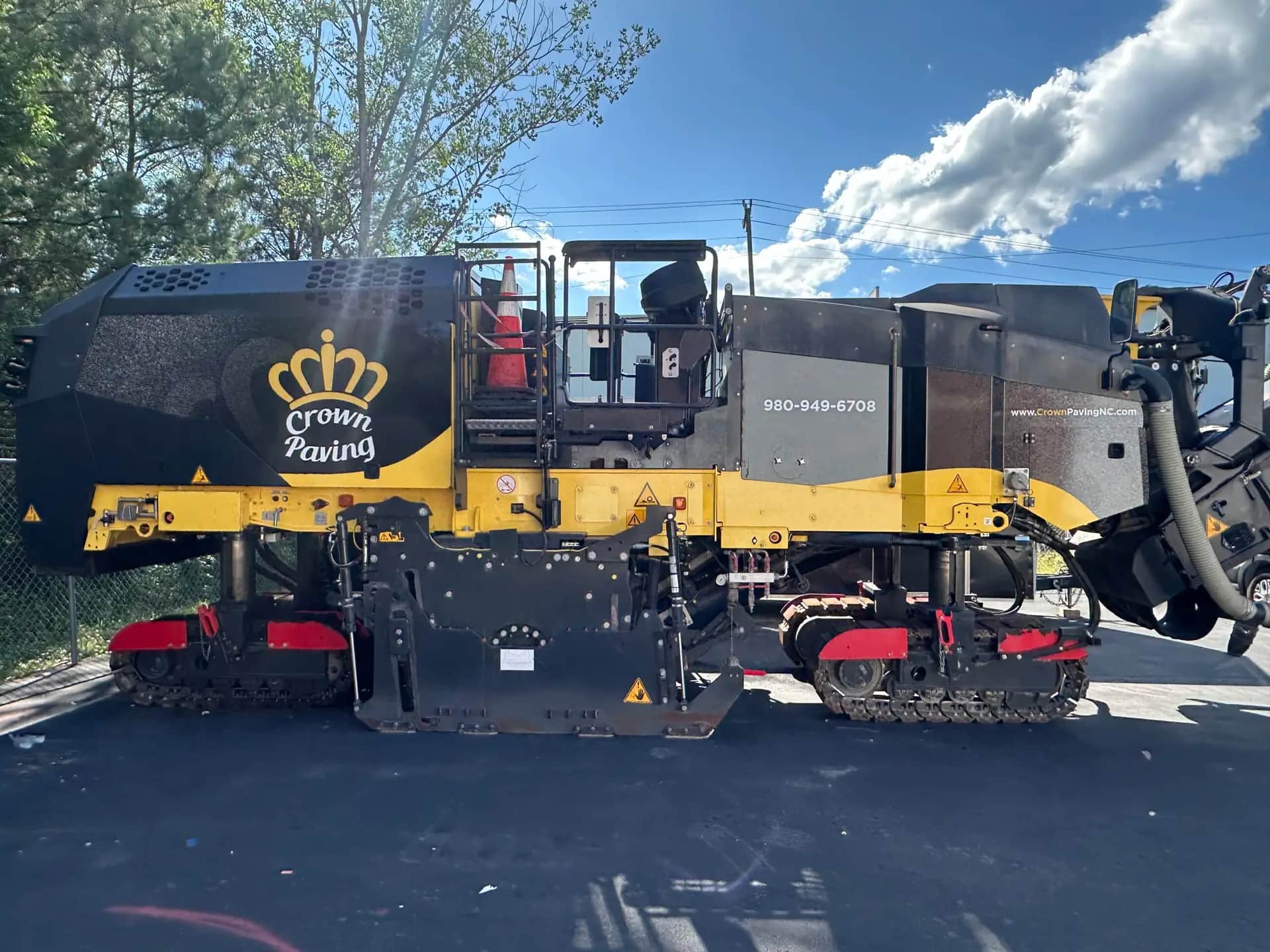
From retail centers to high-traffic access lanes, Crown Paving uses professional milling equipment, clean site controls, and phased execution to prepare failed asphalt for a smoother, longer-lasting resurfacing system.
Clean Milling, Better Overlay Performance
Milling removes failed surface material, improves transitions, and creates the right bonding profile for new asphalt. The result is a smoother overlay, cleaner tie-ins, and a resurfacing project that looks intentional from curb line to drive lane.
What Is Asphalt Resurfacing?
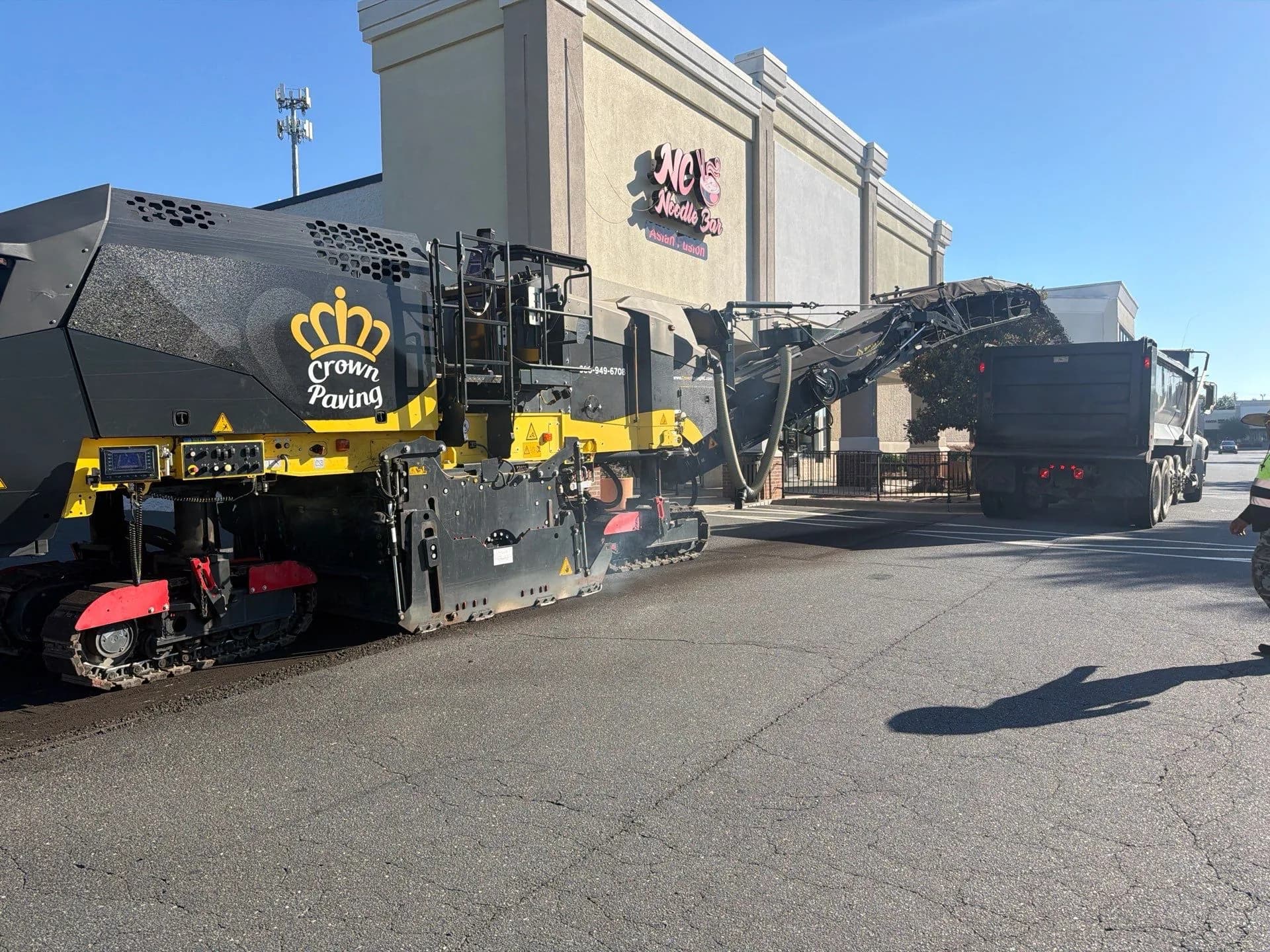
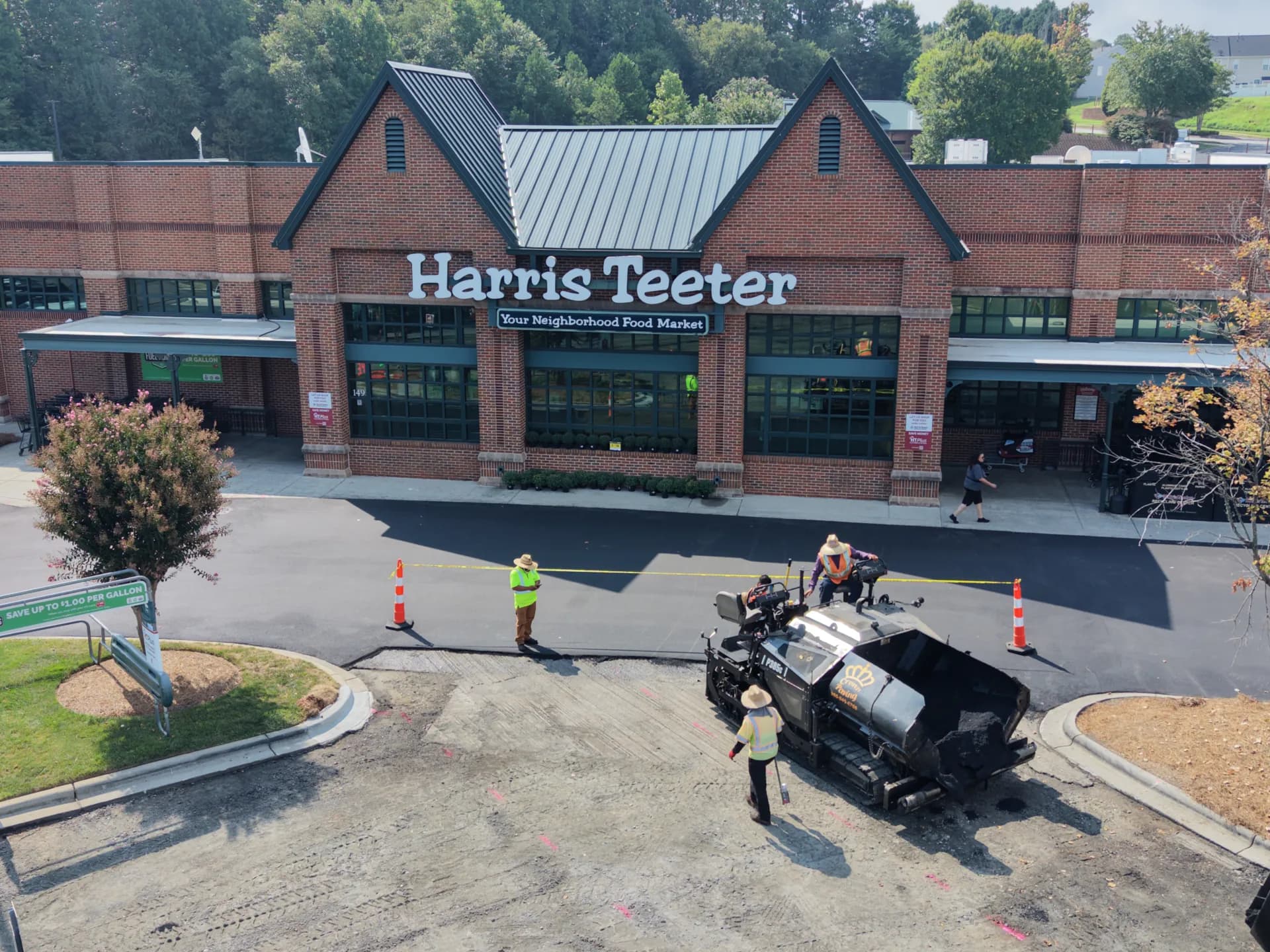
Asphalt resurfacing, also known as milling and paving, is a multi-step process that involves the removal of the deteriorated surface via milling, the application of a tack coat to ensure proper adhesion, and the placement of new asphalt. The process can range from shallow milling, typically no less than 1.5 inches, to full-depth removal down to the stone base.
What Is Asphalt Milling?
Asphalt milling is the process of removing a portion of the existing asphalt surface using specialized equipment. This allows Crown Paving to eliminate damaged pavement, correct drainage issues, and create a smooth transition for the new asphalt overlay. Milling is often the most cost-effective way to restore a parking lot while preserving the existing foundation.
When Should You Do Asphalt Resurfacing?
You should consider asphalt resurfacing when the surface layer of your parking lot or roadway has reached the end of its service life, with cracking, rutting, raveling, or surface roughness, but the underlying base remains structurally sound. Addressing surface deterioration early can help reduce long-term maintenance costs and extend the value of your pavement investment.
Why Should You Do Asphalt Resurfacing?
- To remove surface irregularities and distresses (e.g., ruts, cracks, and bumps).
- To restore proper cross-slope and drainage.
- To provide a uniform, textured surface for the new asphalt overlay.
Need Striping Layout Changed? Perfect Timing.
Asphalt resurfacing is the ideal opportunity to update your parking lot layout. Whether you need to add parking spaces, improve traffic flow, create additional ADA-compliant stalls, or reconfigure loading and fire lanes, Crown Paving can redesign and install a striping plan that better fits your property’s current needs.
Why Choose Crown Paving for Asphalt Resurfacing?
Equipment Standards
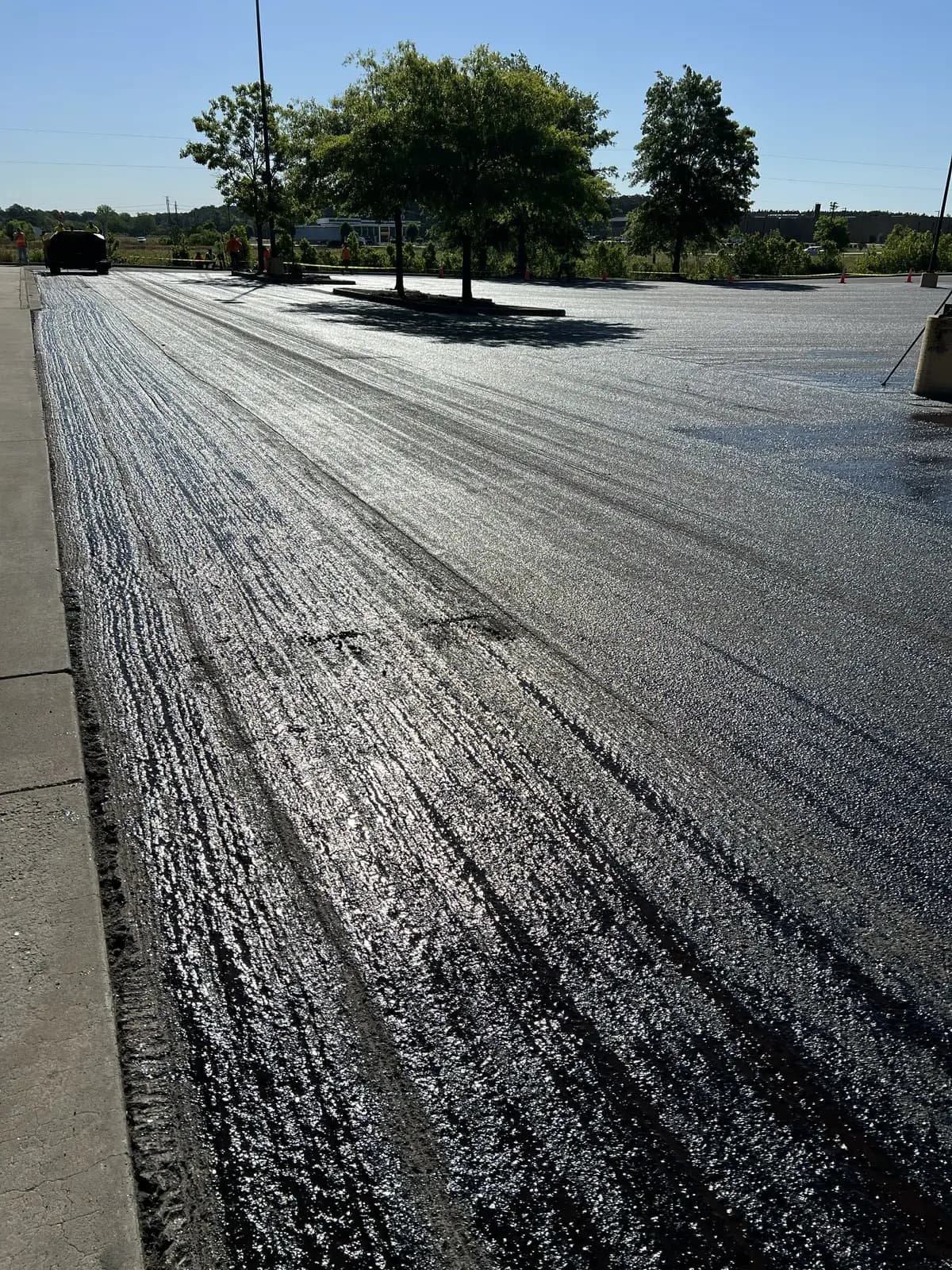
Crown Paving resurfaces with its own milling and paving machines, mechanical brooms and precision tack coat equipment. We utilize state-of-the-art milling and paving machines to ensure precision and efficiency. Mechanical brooms are employed to keep surfaces clean and debris-free. Our tack coat application is performed with precision equipment to ensure optimal adhesion between layers. This commitment to using cutting-edge technology guarantees superior project outcomes.
Material Standards
All materials Crown Paving uses when resurfacing asphalt will always at a minimum meet the relevant DOT specifications for asphalt binder, aggregate, and mix design. These specifications ensure that the materials possess the necessary properties for durability, rutting resistance, and performance under traffic and environmental conditions.
Inspection Standards
Crown Paving samples and tests both materials and in-place density throughout a resurfacing project to confirm compliance with the specification. Inspection and testing of materials and workmanship runs for the length of the job. We are happy to contract a third-party testing agent or work alongside a client contracted agency.
Should You Patch or Resurface Your Parking Lot?
Resurfacing is the right call when cracks cover more than 30% of the surface, potholes keep coming back in different spots, the asphalt has oxidized gray and brittle, or the lot feels rough and uneven across large sections, and the base underneath is still stable. If the damage is limited to small isolated areas, cracks are narrower than a quarter inch and not interconnected, and the base beneath those spots is firm, asphalt patching is the cheaper and correct repair. Choosing patching when resurfacing is genuinely needed usually leads to premature failure of the new surface and wasted budget. Full comparison: Patching vs. Resurfacing.
How Much Asphalt Is Removed When You Mill?
It depends on the condition of the surface and what the new asphalt has to tie back into. Crown Paving mills anywhere from shallow depths, typically no less than 1.5 inches, to full-depth removal down to the stone base. Milling to the correct depth is what returns the finished surface to its original elevation, so doors, curbs, gutters and drainage inlets still meet the pavement the way they did before.
Is Parking Lot Resurfacing a Capital Expense or an Operating Expense?
Usually a capital expense. Where a project mills a significant portion of the existing surface before applying a new asphalt layer, and that extends the life of the lot by roughly 5 to 10 years or more, it is typically CapEx, and IRS guidance treats it as an infrequent action. Work you expect to repeat more than once in a 10-year period, such as seal coating and crack filling, is generally expensed instead. Crown Paving scopes work with that distinction in view: Understanding Commercial Parking Lot Expenses, and confirm the treatment with your own tax advisor. Confirm the treatment with your own tax advisor.
Ready to Start Your Project?
Request an estimate and tell us about your property, pavement condition, schedule, and bid documents.
Request an Estimate